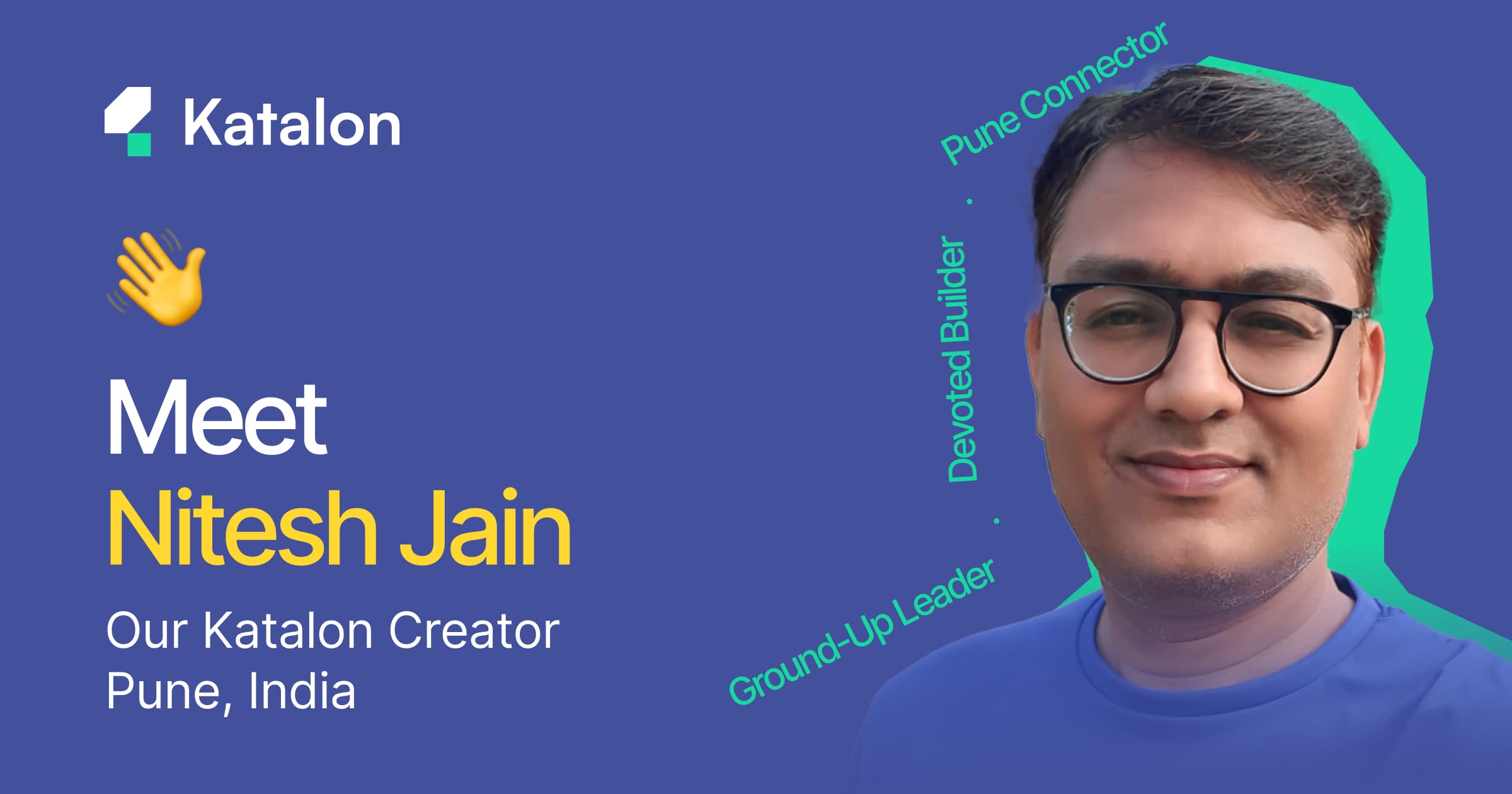



We’re excited to introduce Nitesh Jain, a passionate QA professional based in Pune, India. From moving to a new city for work to building a strong local testing community, Nitesh has created space for knowledge sharing, career growth, and even a little fun along the way.
In this interview, he shares his journey into automation, the challenges he’s faced, and how he’s helping shape the QA ecosystem through meetups, mentorship, and hands-on support.
Let’s dive into his story 
Q: Can you give us a little bit about yourself? Like, your background, your hometown, and what’s your current location?
A: I am currently living in Pune in state Maharashtra of India. However, I am from another city called Raipur. It’s the middle part of India. It has been a good journey being a QA and automation engineer. So, it’s been like 17 years now. I’ve worked with different companies on this. And as well as out of passion, I’ve started, you know, different QA groups. My LinkedIn community also has a big QA group of 75,000 members there. It’s going well. We solve problems related to different things on testing and automation.
Q: What brought you to Pune, and how does it compare with other tech cities in India?
A: I relocated to Pune for work when I got my first job here. Pune is one of the major IT hubs in India, along with Bangalore, Hyderabad, and Mumbai. These are the older, established cities that have a lot of big IT companies and tech opportunities.
Q: What is it like living and working in Pune, and what does life look like for you and your family there?
A: Pune is quite a vibrant city. For software professionals, a typical day starts around 8 or 9 in the morning with the office commute. Public transport like the metro and subways is pretty decent, although traffic can get hectic as the city continues to grow. From an IT perspective, Pune is really emerging, with many mid-size and small-scale tech companies setting up here.
What I personally enjoy most is the environment. The city is surrounded by hills and lakes, and it is a beautiful place to live. There are plenty of nearby getaways like Lonavala, Khandala, Mahabaleshwar, and Karjat. These are peaceful hill stations that offer a great escape. Mahabaleshwar, for example, is actually one of the top five rainiest places in India.
I live here with my wife and our 11-year-old child. My extended family and parents are still in Raipur, but Pune has become home. It is where I have grown professionally while staying connected to nature and building a life with my family.
Q: Was testing a choice or something you discovered later?
A: Yes, I came into testing and automation by choice. I found it very interesting, especially the idea of helping deliver a quality product. Initially, I started as a Visual C++ developer in my first or second project, and for about a year, I worked with both Visual C++ and JavaScript. But then I joined a project that required a lot of testing, and that’s where I developed a real interest. From there, I gradually shifted my focus toward testing and automation, and started learning various tools to test web applications and APIs.
Q: What was your biggest testing project, and how big was your team back then?
A: Yeah, my biggest testing project was for a large e-commerce client where we had to check the performance of APIs. It was a big challenge because we had to simulate scenarios with a thousand users or ten thousand API calls and observe how the calculation engine performed under pressure. It was a very interesting project. Our team had around ten members, including three test engineers and the rest were developers, architects, and others.
Q: What tools did you use for that project?
A: So initially, we started with Java, pure Java coding, to simulate a lot of API calls. At that time, we were not using REST Assured. We worked directly with Java using components like .NET, URL, OPH, HTTP. We began with that approach. Later, we thought, okay, let’s try some other API automation tools as well, like REST Assured or JMeter. But in the beginning, everything was done using core Java. That’s when I realized it is fully possible through proper programming, whether it’s Java or any other language. Most tools are just wrappers created on top. But we built everything with direct coding and basic libraries.
Q: When did you first learn about automation tools?
A: I was first introduced to automation around 2010 or 2011. At the time, some of my team members were using some other legacy testing tools. I found it really interesting to see how the automation worked. That same year, I started learning Selenium. Back then it was called Selenium RC, the first version of the tool.
Later on, I also worked with other tools because one of my projects required it. Along the way, I built a few test data generation tools on my own to support our testing needs. I have been working with automation tools for more than 12 years now. That is how it all started for me.
Q: What was your first impression of automation tools?
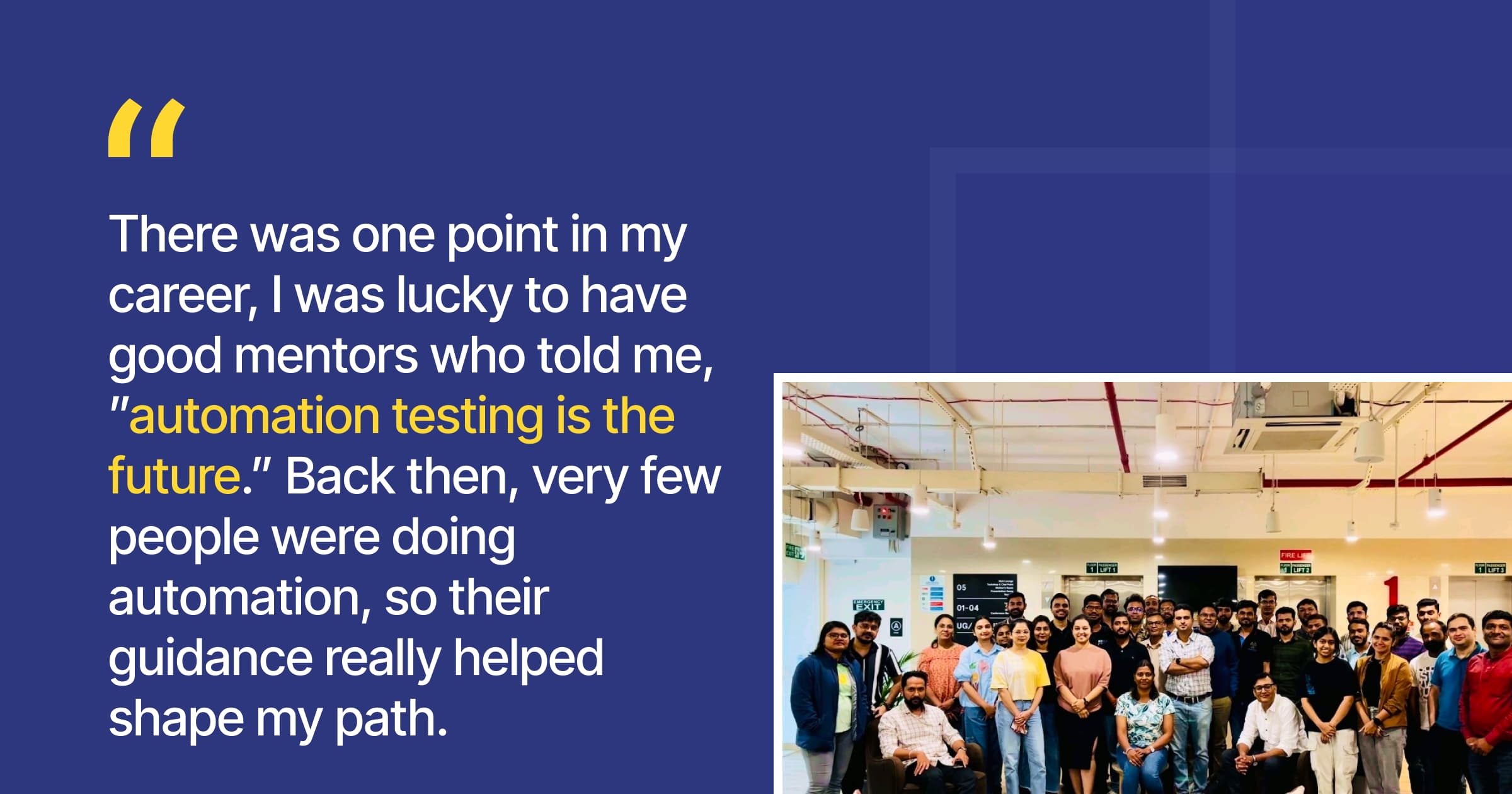
A: I felt really good. I was like, wow, how is this even possible, right? The manual testing we were doing, all the test cases we used to run manually, there is actually a way to automate them. It was very interesting and challenging at the same time. We did a lot of automation back then. From that point on, I had some great mentors and guides who told me that testing automation is the future. Around 13 years ago, very few people were doing automation. But over time, we realized that this is the right direction. In the future, when there are a lot of test cases and less time for execution, automation becomes essential.
At that time, Agile was not widely adopted. Most companies were still following the waterfall model. But then the incremental approach came, the iterative model started becoming popular, and everyone started moving in that direction. I witnessed that whole journey. And yes, automation definitely has its place and importance.
Q: When did you discover Katalon?
A: I discovered it a long time back, probably around 2017. Yes, Katalon Studio was available at that time. We tried it, and we found it very interesting. We even used it for a small POC within the organization, and it was very helpful. It was a good experience.
Since then, I have used it for learning purposes. I want to explore it in more detail, but I have not had much time so far. Still, I know the basics and how it works, what it does. I can also relate it to other tools and understand how they function. So I have a good idea of how the low-code or no-code automation works in Katalon’s ecosystem. It is quite interesting, and I would definitely like to explore all its capabilities in more depth.
Q: What motivates you to run this chat community and organize meetups?
A: What really drives me is my passion for sharing knowledge. I believe that when we share, we are not just teaching. We are also learning. Every time I prepare to share something, I end up discovering new things through research and reflection. That process helps me grow.
Another thing that motivates me is the chance to support others in their careers. When we meet during community events, we often talk about interviews, job opportunities, and how to handle the hiring process. Helping each other in those moments makes the community even stronger.
It is also about supporting people. Meeting up with them, sharing what you know, and helping them understand what could benefit them, I think free of charge meetups can be helpful as it tears down barriers to welcome new people. Attendees leave thinking, yes, we came and we learned something useful. That is what matters.
Q. What makes you feel the proudest in your testing career?
A: In terms of achievement, it’s about knowing that we’re delivering something good which is a product with quality. That’s one thing.
And from the automation perspective, I feel happy when we achieve something that reduces testing time. It helps the organization save money by cutting down on execution time. So yes, there’s a real sense of achievement in that.
Q. What’s your vision for the QA community in Pune in the next 5 to 10 years?
A: My vision is bigger here. Right now, thousands of people in Pune are connected with me. Our LinkedIn group has around 76,000 members, it’s a big community. In Pune alone, I think there are more than 30,000 professionals working in QA and automation. I want to connect with every one of them, whether they’re interested or not (big smile). I want everyone to know about this QA community. My goal is for all the testing leaders, managers, and test directors to be aware of it.
And ideally, I’d love to see a time when those managers or directors say to their team, “You should go attend that meetup.” That would be a real achievement.
Q. What is the unique activity in your meetup?
A: We often talk about testing and a variety of other topics. I really enjoy interacting with people, traveling, and sharing ideas. One of the things I love most is giving talks, especially on automation and how to approach it in a clear, structured way. Many people want to learn but are unsure where to start, and I enjoy helping them find that direction.
Outside of work, I also enjoy singing, hosting events, and being part of engaging activities. At one of our meetups, we even included a short stand-up session. The jokes were light, mostly centered around everyday IT experiences. It brought a lot of energy to the room and made the environment fun and relaxed. Moments like those help people connect beyond just the technical discussions.
Q. If you could automate anything in life, not just testing, what would it be?
A:One thing that comes to mind is automating screen time limits for kids. If my child is using the phone for more than 30 minutes, it should automatically switch off. The same goes for a laptop or iPad. Kids are using too many devices these days, and it’s hard to balance screen time. If that could be automated, it would be really helpful.
Q. If Katalon could add any feature tomorrow, no matter how ambitious, what would you suggest?
A: I would love to see deeper integration with Jira. For example, if we write test cases in Jira, it should be possible to execute them in Katalon directly from Jira, with a two-way sync. If something is executed in Katalon, the Jira ticket should automatically update with the result.
Another feature I would suggest is automatic accessibility checks. Since we visit many pages during automation runs, Katalon could generate accessibility reports in the background.
Lastly, a performance delta tracker would be useful. If a page took 7 seconds to load previously but now takes 17 seconds, the system should highlight the change. It would help us catch performance issues much earlier.
-Thank you so much Nitesh, it has always been a pleasure to have you
 Feeling inspired by Nitesh’s story? If you’d like to become a Katalon Creator and share your own testing journey, just reach out! We’re always happy to welcome new voices into our community.